WORTH WATCHING:
Every Hard Thing Makes the Next One Easier
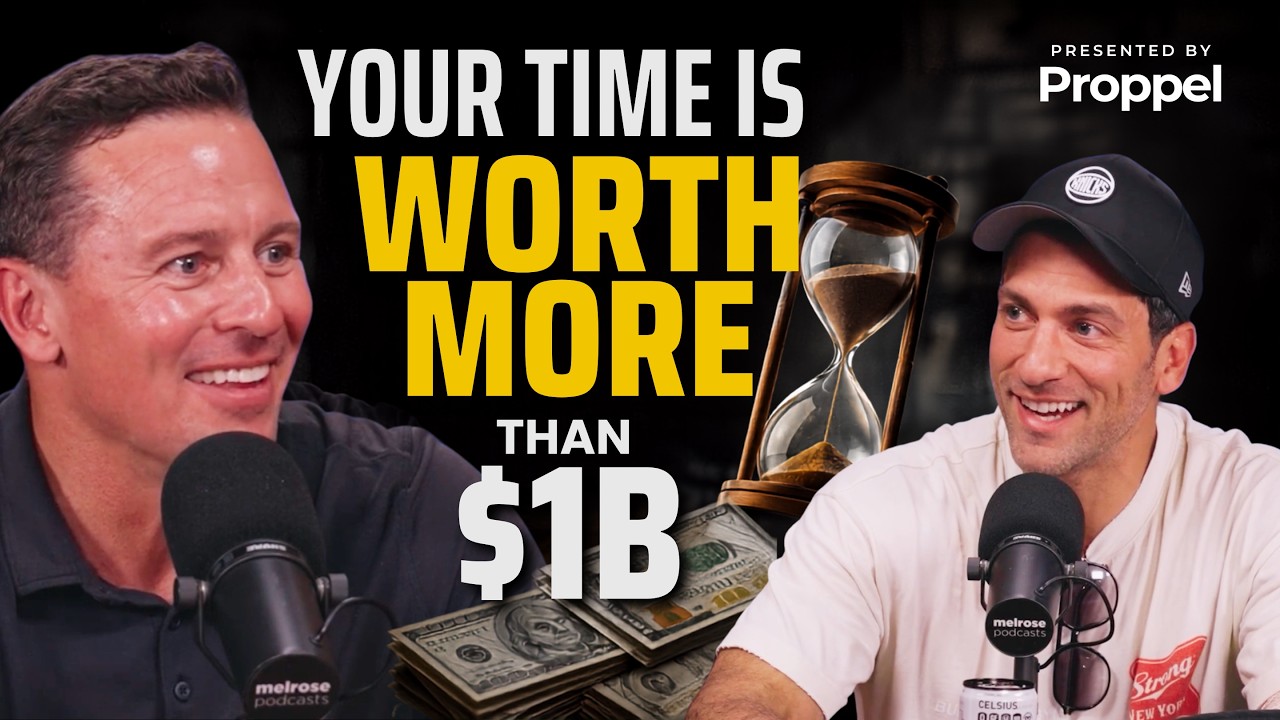
The Advantage · Mike Wystrach × Kenny Santucci · ~47 min
This week's Worth Watching is episode four of The Advantage with Kenny Santucci. Kenny was an influencer before that was a job title, competing on nine seasons of MTV's The Challenge from roughly 2005 to 2012. He owns The Strength Club in Flatiron and in Caldwell, New Jersey, and he founded Strong New York, the event he grew out of a Solace basement into one Forbes named a top fitness festival. It takes over the Glasshouse on September 26.
Full disclosure, I'm a customer. I took Kenny's early morning class at Solace for years, and he's the reason I kept showing up at 5am. I think he's one of the best trainers in New York.
WHAT I LOVED ABOUT IT:
Kenny joined his first gym at 13, in 1995, because he was standing in the mirror before an eighth-grade birthday party sharing belts and pants with his dad. There was no internet to learn from, so he stole muscle magazines off the rack and worked the splits out of them, and at 15 or 16 his parents gave him the Arnold encyclopedia, which he read cover to cover.
Then he spent thirty years choosing hard things on purpose. Wrestling. Ironmans. Marathons. CrossFit. Every one of them picked to prove something to himself. The payoff was never the medal. It was that each finish line made the next hard thing look smaller, so by the time he was signing a lease and getting sued and rebuilding a business out of a public park, he'd already trained for the feeling.
It runs the other direction too. If you live a very protected life, hard things stay terrifying, because you've got no evidence you can survive them. Courage isn't a personality trait you're issued at birth. It's a stack of receipts you build one hard thing at a time.
The other moment I keep thinking about is what he did when New York shut down. In January 2020 he'd signed with Under Armour and with HYROX, and within weeks both were gone. In March he carried a couple of kettlebells, a TRX and a jump rope to the park at 28th and 10th and started running workouts for whoever walked past. Later he upgraded to a heavy-duty push cart, and the wheel came off on the unpaved streets, so he carried the load back by hand for an hour. Two gyms came out of that park.
THE LINE THAT STUCK
"Every finish line I've ever crossed, I'm like, oh, if I could do this physically, then business and all this other shit's easy."
MY 20-SECOND RECAP
if you don't have the full 47 minutes
→Hard things compound. Every difficult thing you finish lowers the bar for the next one. Kenny stacked wrestling, Ironmans and marathons, then found that signing a lease felt manageable. Pick something physically hard on purpose and finish it. The confidence transfers.
→Don't wait for the conditions to be right. When the gyms closed, Kenny carried kettlebells to a park and started. Two businesses came out of it. Whatever you're waiting on is probably not required.
→Admitting you don't know is the skill. His words: he doesn't know anything about business, and knowing that is the most important thing. He asks for help constantly and credits it for most of his good decisions, including the ones where he was about to go the wrong way.
→Pick something you'd do for free. Kenny's podcast cost him close to $50,000 over two years before it made a dollar. He filmed ten episodes before releasing one, and he's past a hundred now. He kept going because he'd have done it anyway.
→Watch other people win. He built a community, an event and a media arm on the premise that helping the people around him succeed makes his own life better. It's also the best business strategy in the episode.
